

Choosing a smart home air quality monitor in 2026 isn’t about staring at pretty graphs on an app. It’s about building a home that reacts to pollution before you even notice it. The real promise is automatic, set and forget protection: your monitor detects a spike, your purifier kicks on, your HVAC fan ramps up, and the air clears without you touching anything. But getting that seamless automation right depends on sensors, integration protocols, and trigger rules that most buyer guides gloss over. This article walks through exactly what to look for, what to test after unboxing, and where the evidence still falls short so you can buy with confidence and validate performance in your first 30 days.
Key Takeaways
- Indoor air can be up to 5 times more polluted than outdoor air due to concentrated sources like textiles, paint, and cleaning products. A monitor that only displays readings won’t solve that. You need one that triggers automated responses.
- Essential sensors include PM2.5, tVOC, CO2, radon, and formaldehyde. Each addresses a different health risk. Most affordable monitors skip radon and formaldehyde, which means you may need to spend more or accept coverage gaps.
- Published accuracy specs, VOC trigger latency data, and regulatory standards for home radon and formaldehyde sensors are largely absent from buyer facing sources. Your 30 day test plan is your safety net.
- Why indoor air monitoring matters
- Which sensors you need for a truly automatic system
- Real world performance, integration gaps, and accuracy tradeoffs
- Final buying checklist, 30 day test plan, and recommended models
- Frequently asked questions
Why indoor air monitoring matters
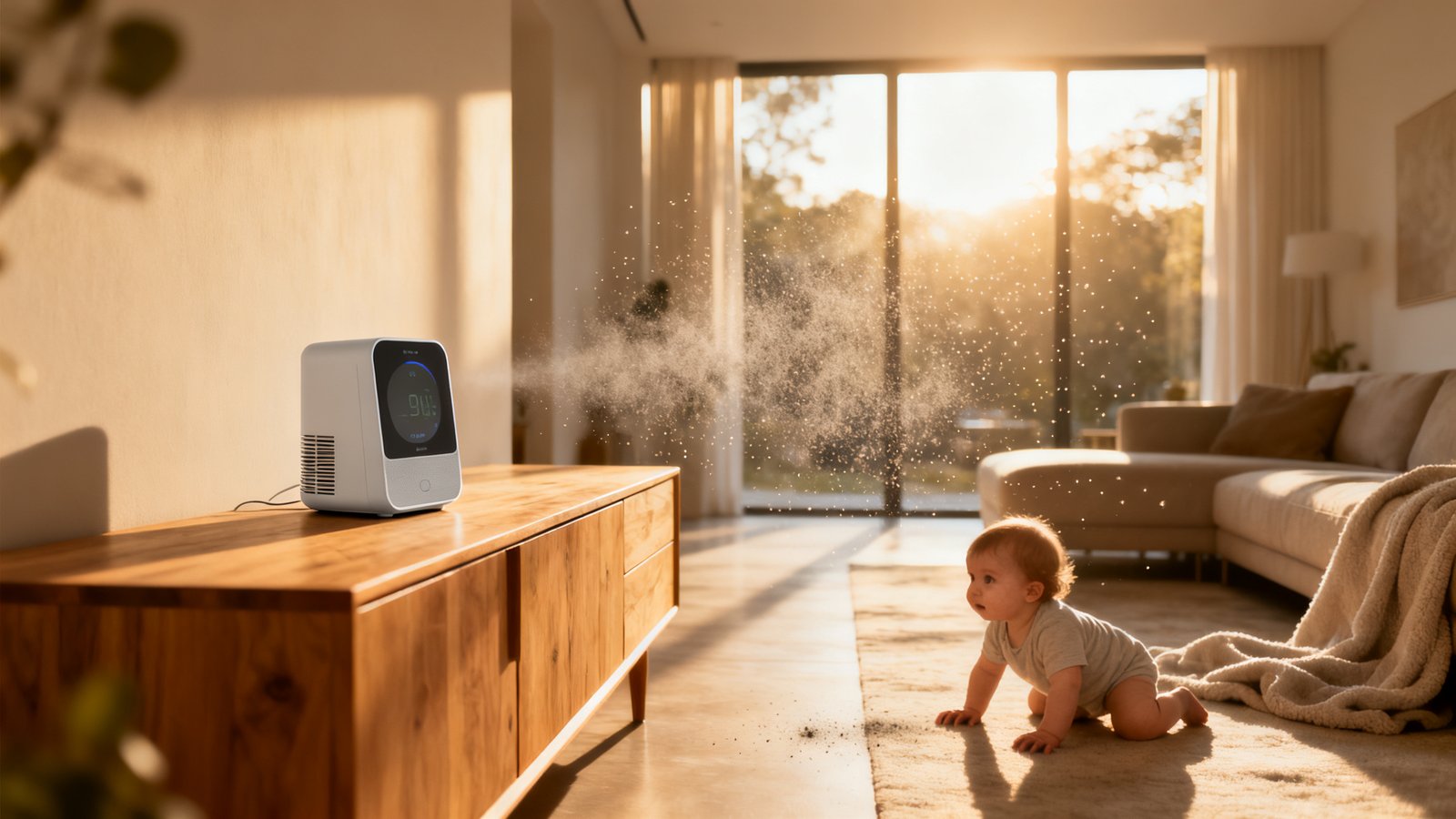
Indoor air can be up to 5 times more polluted than outdoor air, according to research cited by Kaiterra. That statistic alone should shift how you think about home air quality. The pollutants don’t come from outside. They originate inside your home: new furniture off gassing formaldehyde, carpets releasing VOCs, cooking generating PM2.5, and basements accumulating radon. These sources concentrate in enclosed spaces where ventilation is limited. Opening a window helps temporarily, but it won’t stop a slow radon leak or eliminate VOC emissions from a recently painted room.
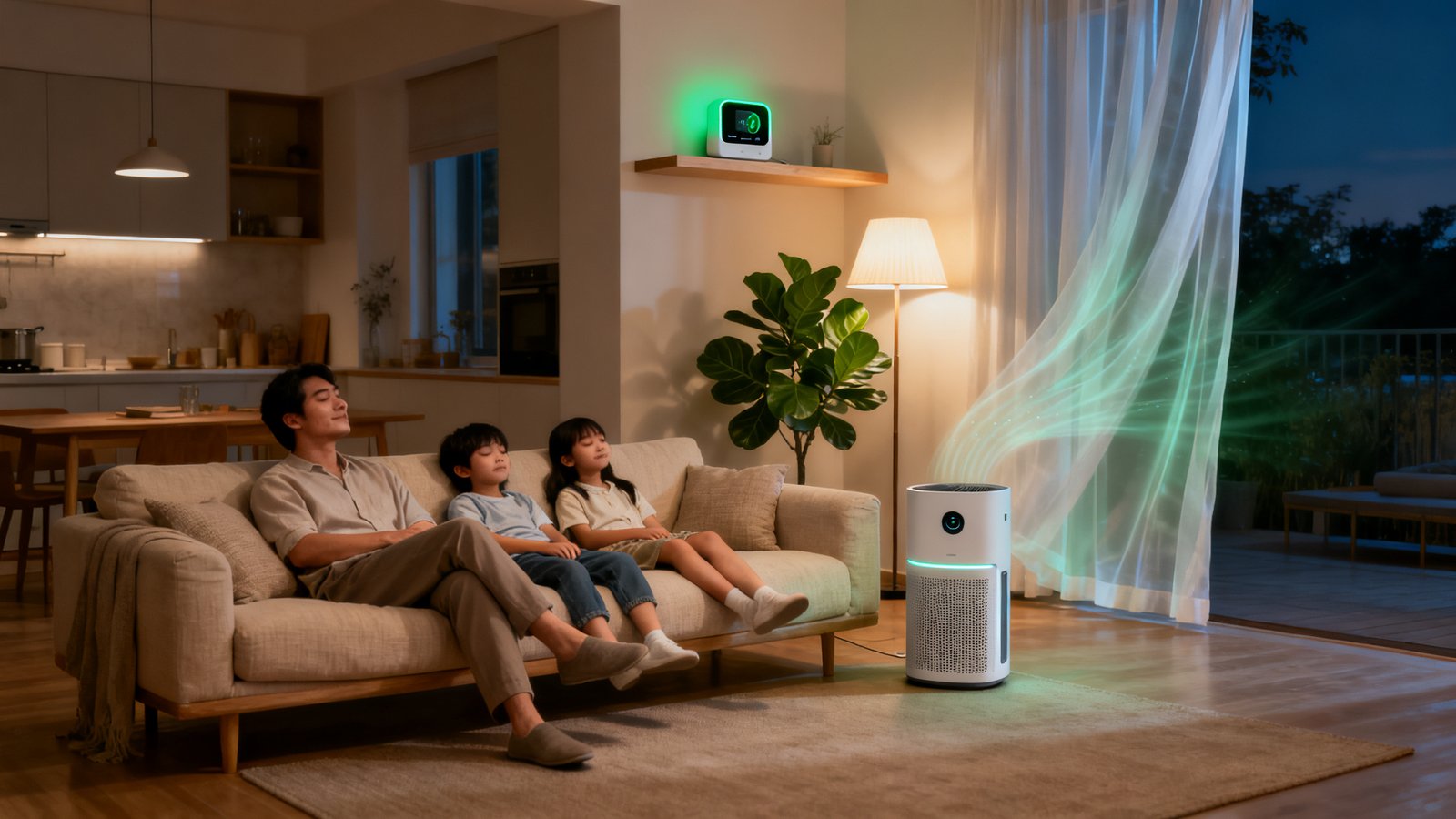
A smart home air quality monitor solves this by acting as the brain of your indoor pollution control system. It doesn’t just measure. It communicates. When paired with a smart plug controlling a purifier or a smart thermostat managing your HVAC fan, it creates a responsive loop that activates automatically when pollutant thresholds are breached. For households with allergies, young children, or elderly family members, this automation isn’t a luxury. It’s a practical defense against triggers that worsen asthma, disrupt sleep, and create long term respiratory stress.
The urgency for automated monitoring grows when you consider that many pollutant sources are invisible and odorless. Radon has no smell. Low level VOC exposure from cleaning products or adhesives doesn’t announce itself. You might feel tired, congested, or headachy without knowing why. A system that continuously watches and responds closes that gap while you focus on living your life.
Which sensors you need for a truly automatic system
Not all sensors are created equal, and not all are necessary for every home. But if your goal is full automation with minimal manual intervention, you need coverage across the major pollutant categories. Here is what matters.
PM2.5 is the non negotiable starting point. These fine particles come from cooking, candles, fireplaces, and outdoor infiltration. They penetrate deep into the lungs. A pm2.5 home monitor 2026 should detect changes quickly and trigger a purifier in under a minute. Without PM2.5 sensing, your automation has no trigger for the most common daily pollution events.
tVOC sensors cover a broad range of volatile organic compounds from paints, adhesives, new furniture, carpets, and cleaning products. These sensors are essential for detecting off gassing events that happen after home renovations, furniture deliveries, or deep cleaning sessions. A VOC sensor smart home integration lets you automatically ramp ventilation or activate a carbon filtered purifier when compound levels spike.
CO2 sensors matter more than most buyers realize. Elevated CO2 doesn’t just indicate poor ventilation. It directly impacts cognitive function, focus, and sleep quality. In bedrooms, home offices, or any space where people gather for hours, a CO2 sensor that triggers an HVAC fan or fresh air intake keeps the atmosphere sharp and healthy.
Radon and formaldehyde are the specialized sensors that separate budget monitors from comprehensive systems. A radon formaldehyde sensor home device is especially important for ground floor and basement areas where radon accumulation risk is highest. Formaldehyde off gasses for years from pressed wood products, certain insulation types, and some textiles. If your home has a basement living area, a recent renovation, or new furniture throughout, skipping these sensors leaves a significant blind spot.
Real world performance, integration gaps, and accuracy tradeoffs
Detection speed and latency
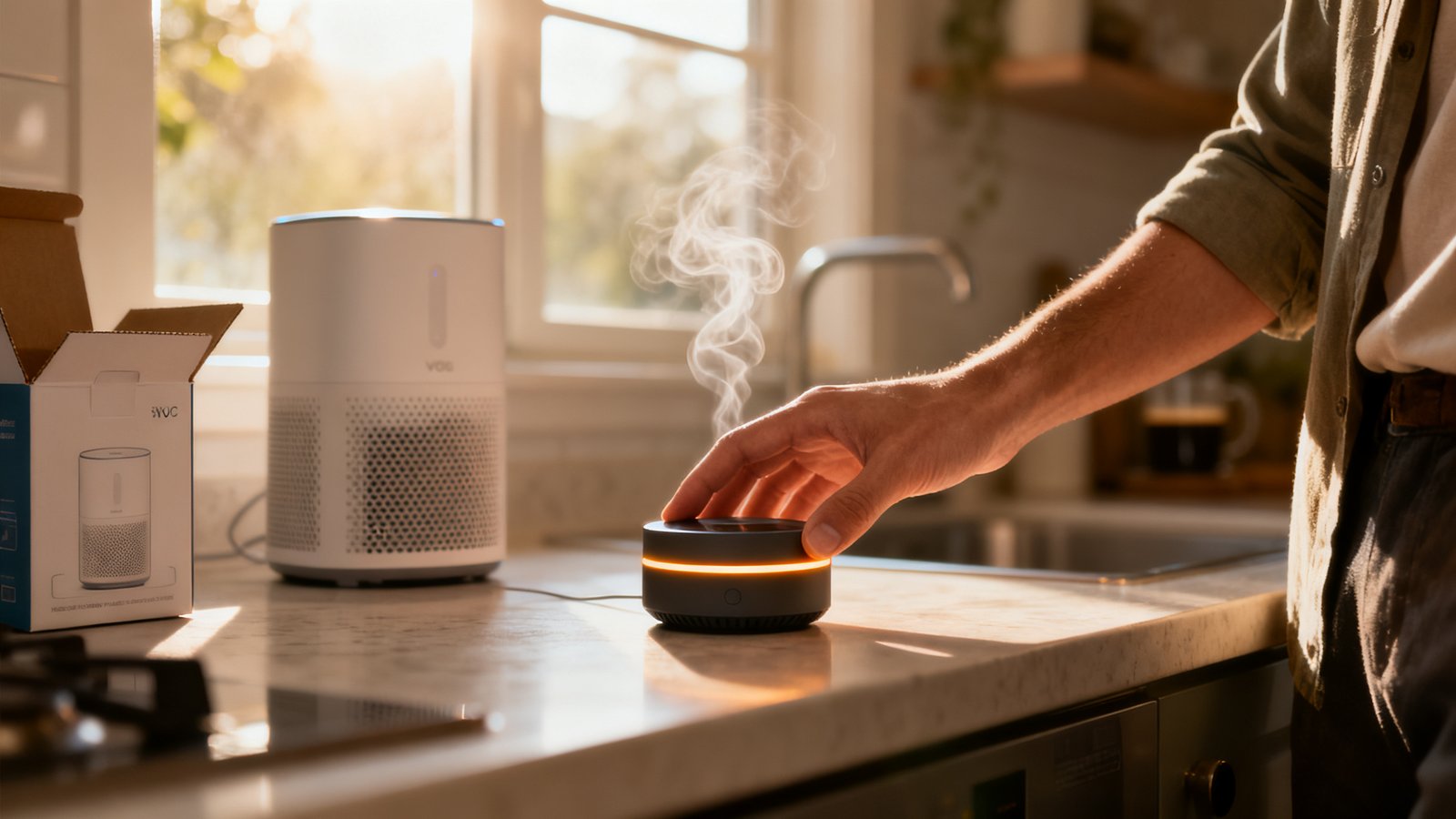
Speed matters when pollutants appear suddenly. Consumer Reports testing shows that top rated monitors detect PM2.5 dips in under 30 seconds when tested with cigarette smoke. That’s fast enough to trigger a purifier before particles spread through multiple rooms.
But VOC detection latency is a different story. The research sources do not provide quantitative data on the time delay between VOC spike detection and purifier activation in real use. This gap is significant because VOC events like paint off gassing or cleaning product fumes can intensify quickly. If your smart air purifier automatic trigger lags by several minutes, the concentration peak may already pass before the purifier responds effectively. During your 30 day test, deliberately introduce a VOC source like an alcohol wipe near the sensor and time how long the purifier takes to activate. Document that number and check whether the automation holds up under repeat conditions.
Integration paths and automation gaps
The integration landscape in 2026 is fragmented but functional. Some monitors connect via open APIs, others rely on specific smart home platforms like Apple HomeKit, Google Home, IFTTT, or Alexa routines. Industry sources confirm that certain models can integrate with HVAC systems and trigger purifiers or ventilation automatically. However, no source identifies which specific auto HVAC triggers top selling monitors miss.
This means you need to verify integration depth yourself. Don’t assume a monitor that advertises “Alexa compatible” supports two way control or conditional triggers. Some integrations only allow voice queries like “Alexa, what’s the indoor PM2.5 level?” without enabling automated routines. The buyer checklist later in this article addresses how to test for genuine two way automation during your first week of ownership.
For broader smart home context, building a smart home routine that incorporates air quality triggers requires a system that can listen to sensor events and respond predictably. If your monitor only reports data and doesn’t emit events that other devices can act on, you’re stuck with manual intervention no matter how accurate the readings are.
Accuracy expectations and missing standards
Published accuracy specs give a rough starting point. Some monitor specifications show PM2.5 at plus or minus 10 percent and CO2 at plus or minus 15 percent or plus or minus 50ppm, according to HouseFresh testing data. These tolerances are acceptable for triggering automation thresholds if you factor in a buffer.
The bigger concern is what isn’t published. The supplied sources do not specify any required accuracy standard for home radon or formaldehyde sensors. No regulatory body appears to enforce calibration requirements for consumer grade devices in these categories. One industry note mentions that 30 percent of IAQ sensors fail performance standards due to poor calibration, but no specific radon or formaldehyde criteria are cited. This absence of standards means you should prioritize monitors that offer third party calibration certificates or independent lab validation. Without those, your radon and formaldehyde readings are effectively unverified.
2026 cost guide by capability tier
| Tier | Typical Sensors | Automation Capability | Price Range |
|---|---|---|---|
| Basic | PM2.5, tVOC, sometimes CO2 | Alexa or Google Home routines; may lack conditional triggers | $60 to $100 |
| Mid Tier | PM2.5, tVOC, CO2, temperature, humidity | Open API or IFTTT support; can trigger purifiers and HVAC with threshold rules | $150 to $250 |
| Premium | All above plus radon and formaldehyde | Full smart home platform integration; long term radon averaging and VOC trend triggers | $300 to $400 plus |
The Amazon Smart Air Quality Monitor at $69.99 represents the basic tier and can work with Alexa to trigger purifiers. The Airthings View Plus with radon included sits around $300 to $330 at Amazon. Elitech Temtop models with formaldehyde detection exist but pricing for those specific variants is not consistently published. Other Temtop basic PM2.5 monitors appear as low as $27.99, which tells you the sensor hardware itself isn’t expensive. The premium comes from integration capabilities and specialized radon or formaldehyde detection.
Common user complaints and installation pitfalls
The supplied sources do not contain explicit user complaints for smart air monitors on Amazon. Amazon listings show rating clusters like 4.2 and 4.1 stars for popular models, but no complaint text or ranking of top issues is provided in the research data. This absence of complaint data means your post purchase testing becomes even more important.
Based on known failure modes in consumer IAQ devices, here is what you should test immediately after unboxing. First, check for sensor drift by comparing readings against a known reference over 48 hours. Second, test for false positives by triggering automation with a non pollutant event like steam from a shower. Third, verify network and cloud dependency by disconnecting your internet and confirming whether local automations still function. Fourth, stress test app rules by setting a threshold trigger and introducing a controlled PM2.5 source like a candle extinguished nearby. Time the response. If any of these tests fail, you have identified a reliability gap before it matters in a real pollution event.
Where the evidence is thin
Several evidence gaps deserve explicit acknowledgment. No specific 2026 numerical comparisons for PM2.5 levels between indoor and outdoor environments are provided in the research. No source gives comparative indoor versus outdoor radon statistics for 2026, despite radon detection becoming more important for ground floor and basement monitoring. The sources do not identify which auto HVAC triggers top selling monitors miss, leaving buyers to reverse engineer integration capabilities through trial and error. No quantitative data exists on VOC spike to purifier activation latency in real use. And no regulatory accuracy standards for home radon or formaldehyde sensors are cited in any buyer facing source.
These gaps are not reasons to avoid buying. They are reasons to buy conservatively, test thoroughly, and treat manufacturer claims as hypotheses to validate rather than facts to trust. Your 30 day test plan is the bridge between what’s published and what’s real.
Final buying checklist, 30 day test plan, and recommended models
Pre purchase checklist
Before you spend, verify the following. The monitor includes PM2.5 and tVOC at minimum. If your home has a basement or recent renovations, radon and formaldehyde sensors are not optional. The device supports at least one automation protocol that your existing smart home ecosystem uses: HomeKit, Google Home, Alexa routines, IFTTT, or an open API. Two way control is confirmed, meaning the monitor can send events that trigger other devices, not just report data when queried. Published accuracy specifications exist for each sensor type the device claims to measure. Third party calibration or certification is available, especially for radon and formaldehyde. The price aligns with the tier that matches your sensor and integration needs.
30 day test protocol
Week 1: Placement and baseline. Install the monitor in your primary living area or basement, depending on risk priorities. Run it for 7 days without automation enabled. Record baseline readings for all pollutants at different times of day. Compare PM2.5 values against an outdoor reference like a local air quality station. If readings drift more than 15 percent from expected ranges, contact support.
Week 2: Integration and trigger testing. Connect the monitor to your smart home platform. Set up a simple automation: if PM2.5 exceeds 35 micrograms per cubic meter for 2 minutes, turn on a purifier via a smart plug. Introduce a controlled PM2.5 source like a blown out candle or a piece of burnt toast nearby. Time the response from spike detection to purifier activation. If latency exceeds 60 seconds, adjust trigger thresholds or investigate platform delays.
Week 3: VOC and radon validation. For VOC testing, place an alcohol wipe or a small amount of nail polish remover on a surface near the sensor. Monitor the tVOC reading and verify whether your automation triggers within a reasonable window. For radon, understand that meaningful readings require days to weeks of averaging. Set a long term radon threshold alert at 4 pCi/L and confirm the monitor’s averaging algorithm is working. If your air quality detection system home setup includes HVAC integration, test whether sustained high CO2 triggers the fan correctly.
Week 4: Network resilience and edge cases. Disconnect your internet router and confirm whether local automations still execute. Power cycle the monitor and verify it reconnects and restores all automation rules without manual reconfiguration. Introduce steam from a shower or a humidifier near the sensor and confirm no false positive PM2.5 spike triggers. Document any failures and decide whether the device is reliable enough to keep.
Models to consider as starting points
These are examples based on available evidence, not exhaustive recommendations. The Airthings View Plus includes radon detection alongside PM2.5, tVOC, CO2, temperature, and humidity. It sits at the premium tier around $300 to $330. Verify after purchase that the radon sensor stabilizes within your first week and that the platform integrations support your preferred automation triggers. The Amazon Smart Air Quality Monitor at $69.99 represents the budget friendly entry point and integrates directly with Alexa routines to trigger purifiers. Confirm that the routines support conditional thresholds rather than simple on or off commands. Elitech Temtop models with formaldehyde detection exist in the market, though specific pricing for those variants is not consistently published. If formaldehyde is a priority for your home due to recent renovations, research current Temtop offerings and verify formaldehyde sensor specifications before purchasing.
Automation rules that matter
Configure these rules during your second week. For PM2.5, set a trigger at 35 micrograms per cubic meter sustained for 2 minutes before activating a purifier. This avoids transient spikes from brief cooking events while still catching sustained pollution. For VOC, set a trigger based on a percentage increase over a rolling 24 hour baseline rather than an absolute threshold. A 50 percent increase from baseline sustained for 5 minutes is a reasonable starting point. For radon, configure a long term average alert at 4 pCi/L with weekly summary notifications. Radon mitigation isn’t instant, so this trigger informs decisions about ventilation changes or professional testing rather than activating a purifier immediately. For CO2, trigger HVAC fan circulation when levels exceed 1000 ppm for more than 10 minutes in bedrooms or offices during occupied hours.
Building these rules yourself closes the gap left by manufacturers who, as research suggests, may not ship with comprehensive trigger configurations preloaded. The AI smart home automation landscape is evolving toward systems that learn occupancy patterns and predict pollution events before they happen, but for now, manually defined rule sets remain the most reliable approach.
Frequently asked questions
Can a smart home air quality monitor really trigger my purifier automatically?
Yes, provided the monitor supports your smart home platform and offers event based triggers rather than simple data reporting. Look for monitors that integrate with Alexa routines, Google Home automations, Apple HomeKit, IFTTT, or open APIs. Verify two way control during your first week of testing. Some monitors advertise platform compatibility but only support voice queries, not automated triggers. Test this specifically by setting a threshold rule and introducing a controlled pollutant source.
Do I need a monitor with radon detection?
If your home has a basement, a ground floor living area, or is located in a region with known radon risk, radon detection is strongly recommended. Radon is odorless and invisible. Long term exposure is the second leading cause of lung cancer. A monitor that includes radon sensing and supports long term averaging gives you actionable data to decide whether professional mitigation is necessary. Without it, you have no way to know your exposure level.
How accurate are home formaldehyde sensors?
The available research does not specify required accuracy standards for home formaldehyde sensors. Some manufacturer specifications exist but no regulatory enforcement backs them. Look for monitors that provide third party calibration certificates or independent lab validation. If these are not available, treat formaldehyde readings as directional indicators rather than precise measurements. Cross reference with a professional test if readings consistently appear elevated.
What’s the difference between PM2.5 and VOC sensors for automation purposes?
PM2.5 sensors detect fine particulate matter from sources like cooking, smoke, and outdoor infiltration. They respond quickly, often within 30 seconds, making them ideal for triggering purifiers during acute events. VOC sensors detect gaseous compounds from paints, adhesives, cleaning products, and furniture off gassing. Their response time is less well documented in real world testing, and latency between VOC spike detection and purifier activation varies. Both sensor types are essential for comprehensive automation coverage.
How often should I recalibrate my air quality monitor?
Manufacturer recommendations vary. Some devices self calibrate over time using baseline outdoor air assumptions. Others require manual recalibration every 6 to 12 months. Check your device documentation. During your 30 day test period, compare readings against a known reference to establish whether the factory calibration holds. If you notice drift exceeding 10 to 15 percent, recalibrate or contact the manufacturer. Keep a log of recalibration dates and reference values for future comparison.